
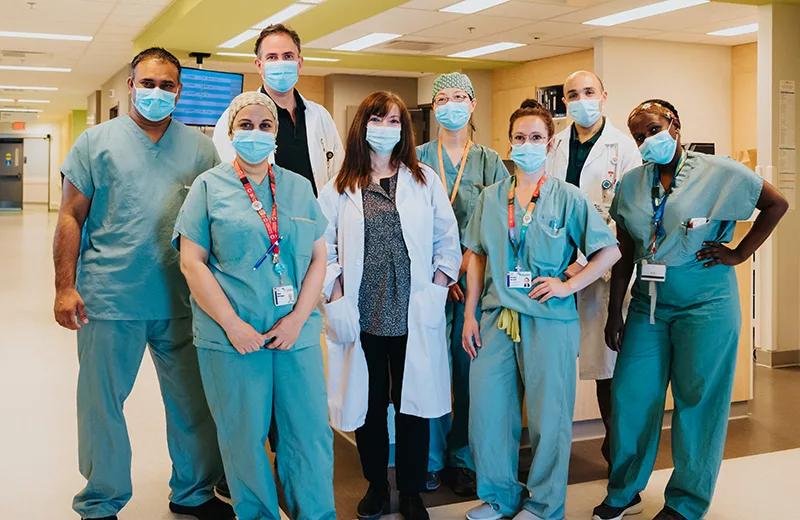
Healthcare Jobs in Canada with Visa Sponsorship: The Deficit Fast-Track Strategy
Foreign medical professionals can leverage Canada’s critical labor shortage to secure healthcare jobs in Canada with visa sponsorship through targeted Express Entry category-based draws and Provincial Nominee Programs (PNPs). With federal projections explicitly forecasting a deficit of over 100,000 healthcare workers by 2030, the Canadian government has systematically lowered immigration barriers for doctors, registered nurses (NOC 31301), and nurse aides (NOC 33102) to accelerate foreign talent onboarding.
Canada’s healthcare ecosystem is facing an unprecedented labor deficit. While traditional economic immigration pathways favor candidates with high youth and Canadian education scores, the current demographic crunch has forced Immigration, Refugees and Citizenship Canada (IRCC) to prioritize clinical experience over almost all other ranking metrics.
If you are a trained healthcare professional, your path to a Canadian work permit and permanent residency (PR) has never been more direct.
image_agent_tag_14260207164214609132
The 2030 Shortfall: Why Canada is Fast-Tracking Foreign Healthcare Talent
The structural math behind Canada’s healthcare crisis is simple: an aging population is increasing medical demand while simultaneously accelerating the retirement of domestic medical staff.
Projected Healthcare Staffing Deficits by Role
| Occupational Category | Core NOC Code | Projected 2030 Shortfall Target | Primary Pathway |
| Registered Nurses (RNs) | NOC 31301 | 60,000+ Vacancies | Category-Based Express Entry / OINP |
| Nurse Aides & Patient Associates | NOC 33102 | 25,000+ Vacancies | Provincial Healthcare Streams / LMIA |
| Family & Specialist Physicians | NOC 31102 | 10,000+ Vacancies | Express Entry / Priority Licensure |
| Home Support Workers | NOC 44101 | 15,000+ Vacancies | Specialized Caregiver Pilot Pathways |
To combat this, Canada has shifted away from general immigration draws, carving out dedicated fast-track operational pathways exclusively for healthcare workers.

The Core Pathways: How to Secure Visa Sponsorship
Securing employment in Canada as a foreign medical professional relies on two distinct operational frameworks: direct employer-sponsored work permits or immigration-first structural entry.
1. IRCC Category-Based Express Entry Draws
The most efficient path to working in Canada does not always start with a grueling job search from abroad. IRCC runs Category-Based Express Entry Draws specifically targeting candidates with at least 6 months of continuous healthcare experience within the past 3 years.
- The Lower CRS Advantage: These targeted healthcare draws consistently feature Comprehensive Ranking System (CRS) cut-off scores significantly lower than standard, all-program draws.
- The Outcome: You receive Permanent Residency first, allowing you to enter Canada with an open work authorization, making you an incredibly lucrative hire for understaffed provincial hospitals.
2. Accelerated Provincial Nominee Programs (PNPs)
Because healthcare delivery is managed provincially in Canada, individual provinces operate prioritized immigration streams to fill local hospital deficits immediately.
- British Columbia (BC PNP): Operates weekly, targeted draws specifically for healthcare professionals, offering direct pathways for workers with a valid job offer in the province.
- Ontario (OINP): Utilizes its Human Capital Priorities stream to routinely scrape the federal Express Entry pool, issuing priority nominations to health professionals matching provincial shortages.
3. Traditional TFWP via High-Demand LMIAs
For support roles such as nurse aides, orderlies, and patient service associates (NOC 33102), Canadian care facilities utilize the Temporary Foreign Worker Program (TFWP). Because the labor deficit is verified nationally, employers in the healthcare sector frequently clear the Labour Market Impact Assessment (LMIA) audit rapidly, proving the immediate domestic vacancy to issue a closed, sponsored work permit.
image_agent_tag_14260207164214610417
Crucial Steps to Navigating Credential Recognition
While Canada wants your skills, medical professions are highly regulated. To convert a visa sponsorship into an active clinical role, you must navigate the credential validation matrix:
[Educational Credential Assessment (ECA)] ➔ [Provincial Regulatory Board Registration] ➔ [Language Testing (CLB 7+)] ➔ [Visa / PR Activation]
- Secure an ECA: Your international degree or diploma must be formally verified by an approved body like World Education Services (WES) to prove it meets Canadian educational equivalency benchmarks.
- Engage with Provincial Regulators: You cannot practice without registration. Nurses must coordinate with bodies like the College of Nurses of Ontario (CNO) or the British Columbia College of Nurses and Midwives (BCCNM) to clear competency assessments.
- Clear the Language Mandate: Frontline healthcare workers must demonstrate high-tier language competency. Aim for a Canadian Language Benchmark (CLB 7 or higher) in IELTS General or CELPIP to clear regulatory hurdles.
The Caregiver Transition Note: IRCC continues to iterate on its dedicated home care and caregiver frameworks to replace sunsetted pilot programs. These modern pathways focus on providing direct permanent residency pathways upon arrival for foreign home support workers who possess verified job offers from Canadian families or authorized home-care agencies.
Frequently Asked Questions
Can I get a healthcare job in Canada without a pre-existing license?
You can secure an initial conditional job offer or immigrate via Express Entry based on your foreign experience, but you cannot legally treat patients or work clinically on a hospital floor until you satisfy the specific licensing requirements of your destination province.
What is the average processing time for a healthcare visa?
If selected via a targeted Express Entry healthcare draw, PR applications are typically processed within 6 months. Temporary work permits backed by an expedited health-sector LMIA can take anywhere from 4 to 12 weeks depending on your country of origin.
Do support roles like nurse aides require a university degree for visa sponsorship?
No. Roles under NOC 33102 (Nurse aides, orderlies, and patient service associates) typically require a relevant post-secondary certificate, diploma, or equivalent on-the-job training coupled with strong English or French language capabilities.
![Agricultural Engineer Jobs in USA: Visa Sponsorship [2026]](https://jobzria.com/wp-content/uploads/2026/07/Gemini_Generated_Image_vvnq20vvnq20vvnq-768x419.png)
![Accountant Jobs in the USA with Visa Sponsorship [2026]](https://jobzria.com/wp-content/uploads/2026/07/Gemini_Generated_Image_s3zg6ms3zg6ms3zg-1-768x419.png)